English
 Arabic
 French
 Spanish
 Portuguese
 Deutsch
 Turkish
 Dutch
Dutch
 Italiano
 Russian
 Romaian
 Portuguese (Brazil)
 Greek
Greek

Growing Green Indoors: The Rise of Home Hydroponics in Urban Living
Other |
2026-01-29 11:53:41
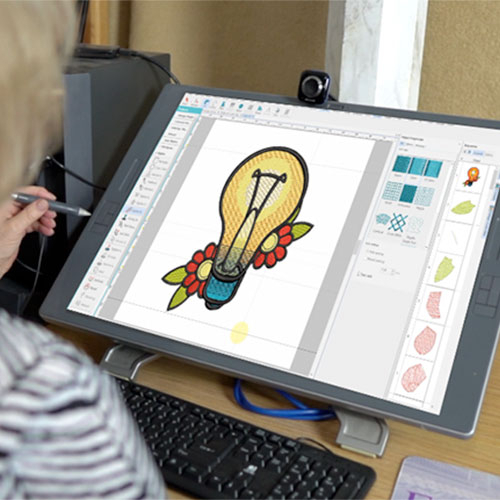
You have that perfect piece of art. It’s a detailed logo, a photorealistic portrait, or a delicate watercolor painting. It looks stunning on screen and in print. But the moment you think about stitching it onto a hat, a polo shirt, or a bag, the anxiety hits. How on earth do you translate those subtle gradients, fine lines, and intricate details into thread? This is where most DIY projects and basic software hit a wall. The secret bridge between your complex art and a pristine embroidered patch isn't magic—it’s the precision of professional Embroidery Digitizing Services.
Think of digitizing as the sophisticated translation between two very different languages. Your artwork speaks the language of color and pixels. An embroidery machine speaks the language of coordinates, stitch types, and thread tension. A professional digitizer is the fluent expert who interprets the nuances, makes critical decisions about the journey of the needle, and ensures the final product isn’t just a copy, but a faithful and wearable adaptation. We specialize in handling the tricky stuff that automated software simply can’t manage, turning your most ambitious ideas into embroidered reality.
It’s tempting to upload a PNG to a $10 automated digitizing website and hope for the best. For a simple text-based logo, you might get away with it. But for complex art, this approach almost guarantees disappointment, wasted materials, and damaged fabrics.
Automated software lacks judgment. It makes guesses about stitch direction, density, and sequencing that often result in:
Puckered Fabric: Too many dense stitches in one area, pulling and distorting the material.
Lost Detail: Fine lines getting swallowed up by fill stitches or breaking into unattractive segments.
Unstable Colors: Poorly planned color blending that makes gradients look blocky and unnatural.
Thread Breaks and Excessive Trims: Inefficient stitch paths that weaken the design and leave a messy backing.
A professional digitizer uses advanced software as a tool, not a crutch. We apply human expertise to solve these problems before the needle ever touches the cloth.
So, how do we turn your complex art into clean stitches? It’s a meticulous, multi-stage process focused on foresight and quality.
First, we don’t just take your file; we ask questions. What fabric will this be stitched on? A sturdy canvas bag behaves differently than a stretchy performance jersey. Is it for a left chest logo or a full-back jacket emblem? The size dramatically impacts the level of detail we can preserve. We analyze your artwork for potential hurdles: tiny text, subtle shadows, overlapping elements. This upfront conversation sets the blueprint for a successful digitize.
This is the critical artistic step. We don't digitize your original artwork pixel-for-pixel. Instead, we often redraw key elements within our digitizing software to create a vector-based roadmap optimized for stitching. This might mean:
Defining Clear Boundaries: Consolidating fuzzy edges into clean, stitchable outlines.
Layering the Design: Strategically planning the order in which elements will be stitched to create depth and prevent distortion.
Adapting Details: Determining which small details will be stitched as fine satin columns, which will become fill areas, and which may need subtle enlargement to remain legible.
Now we build the stitch file. Every single needle movement is manually plotted with intention.
Choosing Stitch Types: We assign the right stitch for each element—Satin Stitches for smooth borders and text, Fill Stitches for large areas (with careful attention to angle and density to avoid pull), and Running Stitches for fine details and underlay.
Engineering the Underlay: This is the invisible foundation. We place a layer of stabilizing stitches beneath the top design to anchor the fabric, create lift for a 3D effect, and ensure top stitches lie flat and smooth. Getting the underlay wrong is the root of most embroidery failures.
Mapping the Stitch Path: We choreograph the exact sequence of sewing. An efficient path minimizes thread trims, jumps, and color changes, resulting in a cleaner back, faster production, and a more durable design.
Here’s where we separate ourselves from speculative digitizing. We don’t just email you a file and call it a day. We stitch it out. On our own machines, using a fabric similar to your final product. This physical prototype reveals everything: tension issues, density problems, color interaction. We then analyze the sample, make precise adjustments to the digital file, and often stitch a second proof to guarantee perfection. Only then do we deliver the final, production-ready file.
What exactly counts as complex? Here are the challenges we handle daily:
Photorealistic Portraits & Detailed Art: Converting shadows, highlights, and skin tones into a palette of thread using specialized techniques like photo-digitizing and careful color reduction.
Small & Intricate Text: Making tiny lettering (under ¼ inch) readable and durable by optimizing stitch type, density, and pull compensation.
Gradients & Blended Colors: Creating smooth transitions between colors using techniques like feathering, stitching one color into another, and strategic stitch placement to avoid hard lines.
Complex Logos with Fine Lines: Managing intersecting elements, thin borders, and intricate shapes without compromising the design's integrity or causing thread breaks.
Problem Fabrics: Developing digitizing strategies for stretchy knits, tricky materials like towels (with high nap), and thin, delicate fabrics that require extra stabilization.
It might seem like an upfront cost, but premium digitizing is an investment that pays for itself.
Eliminate Waste: A perfect file means no ruined garments, no wasted thread, and no production delays from failed sew-outs.
Unlock Efficiency: A clean, well-sequenced file runs faster on the embroidery machine, increasing your output and lowering your cost per unit.
Protect Your Brand: Your logo is your reputation. A crisp, professional embroidery job reinforces quality. A sloppy, puckered one does the opposite.
Gain a Partner: You get more than a file; you get expertise. We become an extension of your team, ensuring every project, no matter how complex, is executed flawlessly.
Embroidery shouldn’t be a compromise. You shouldn’t have to simplify your stunning artwork into a bland, stitchable shadow of itself. The true potential of modern embroidery is vast, capable of reproducing incredible detail and depth—when guided by the right expertise.
Our embroidery digitizing services exist to be that bridge. We thrive on the tricky stuff, treating each complex design as a unique puzzle to solve with technical skill and creative problem-solving. We handle the intricate, painstaking translation from pixel to path, so you can focus on what you do best: designing, branding, and delighting your customers.
Send us your most challenging concept. Let us show you how clean, vibrant, and stunning your complex art can truly be in stitch form.